Quick Answer
For Jacksonville, FL homes, consider spray foam when air sealing and insulating hard-to-reach areas are priorities. Choose the foam type after an on-site assessment of the attic, walls, or crawl space. Fiberglass may be a lower-cost option for topping up existing insulation. The best choice depends on moisture conditions, construction, and budget.
Spray Foam Insulation Jacksonville, FL: Where to Start
For spray foam insulation in Jacksonville, FL, start with an on-site assessment of your attic, walls, or crawl space. Ask the contractor which type of foam fits each area, whether old insulation needs removal, and what the written quote includes. Spray foam can seal air leaks as it insulates, which may help your AC keep up during Northeast Florida’s hot, humid weather.
At Clark Spray Foam, we’re a family-owned Jacksonville contractor offering spray foam insulation for existing homes and new construction. This article covers where foam makes sense, how it compares with fiberglass, and what to expect during installation.

Why Upgrade to Spray Foam Insulation in Jacksonville, FL?
Living in Northeast Florida means dealing with long, sweltering summers, intense afternoon sun, and oppressive ambient humidity. In IECC Climate Zone 2, homes face a heavy cooling load for most of the year. When outdoor temperatures climb into the 90s, uninsulated or poorly sealed attics can easily reach extreme temperatures, turning the top of your house into a giant radiator that pushes heat down into your living areas.
Traditional building assemblies often allow conditioned indoor air to escape while drawing hot, humid outdoor air inside through unsealed gaps, wiring penetrations, and recessed lighting fixtures. According to the U.S. Environmental Protection Agency (EPA), air leakage accounts for a significant portion of energy waste in residential buildings.
Upgrading to residential spray foam insulation creates a continuous thermal boundary and an effective air barrier in one step. By expanding into cracks, joints, and irregular spaces, spray foam restricts unwanted air movement and helps your HVAC system maintain steady temperatures across every room without running constantly.
Open-Cell vs. Closed-Cell Spray Foam
Choosing the right material begins with understanding the core differences between the two main formulations of spray foam:
- Open-Cell Spray Foam: This foam expands significantly upon application, filling deep wall cavities and roof rafters quickly. It provides an effective air seal, offers excellent sound-dampening qualities, and remains slightly flexible. According to the U.S. Department of Energy (DOE), open-cell foam typically delivers an R-value of roughly R-3.5 to R-3.8 per inch of thickness. It is commonly used along attic rooflines where massive expansion fills complex roof framing efficiently.
- Closed-Cell Spray Foam: Closed-cell foam cures into a dense, rigid structure. Because its cellular structure is closed and compact, it resists bulk water penetration and acts as an inherent vapor retarder. It provides a higher thermal resistance, typically around R-6.0 to R-7.0 per inch according to the DOE. It also adds rigidity to building assemblies, making it ideal for moisture-prone areas like crawl spaces or exterior structures where space is constrained.
To explore how these two materials compare for specific applications, read our guide on open-cell vs. closed-cell spray foam.
Priority Areas for Application: Attics, Walls, and Crawl Spaces
Every home has critical thermal boundaries where insulation upgrades yield the greatest comfort improvements:
- Attics: Spraying the underside of the roof deck can create a semi-conditioned or unvented attic assembly, helping reduce heat transfer through the roofline and seal gaps around framing and penetrations. It can be especially useful when ductwork runs through the attic, but the right approach depends on the home’s design. Learn more about attic insulation.
- Exterior Walls: Insulating exterior wall assemblies can help limit outdoor heat transfer and dampen outside street noise. Explore our wall insulation options.
- Crawl Spaces: In our humid coastal environment, vented crawl spaces can introduce ground moisture beneath subfloors, contributing to cupping hardwood floors and musty odors. Installing crawl space insulation along the subfloor or foundation perimeter can help manage humidity and improve floor comfort.

Comparing Spray Foam to Traditional Fiberglass Insulation
Both spray foam and fiberglass have valid applications in Northeast Florida homes. Because we install both systems, we believe in helping homeowners weigh the pros and cons objectively based on their home’s construction, comfort goals, and budget.
| Feature | Open-Cell Spray Foam | Closed-Cell Spray Foam | Fiberglass (Blown-In / Batts) |
|---|---|---|---|
| Typical R-Value (per inch) | ~R-3.5 to R-3.8 | ~R-6.0 to R-7.0 | ~R-2.2 to R-3.8 |
| Air Sealing Capability | High (Expands to seal voids) | High (Continuous air barrier) | Low (Permeable to airflow) |
| Moisture / Vapor Control | Vapor permeable | Vapor retarder / Water-resistant | Permeable; requires separate barrier |
| Settling Over Time | No settling | No settling | May settle or compress |
| Best Application Context | Unvented attics, interior walls | Crawl Spaces, compact cavities | Standard attic floors, budget top-ups |
Fiberglass remains an economical and widely used solution, particularly when adding to an existing layer of clean insulation across an open attic floor. However, fiberglass batts and blown-in fiberglass are air-permeable materials. Without dedicated air-sealing measures, hot attic air can move through or around the fibers via convection.
Spray foam adheres directly to the substrate, expanding to fill gaps and preventing convective airflow. Because the best choice depends on your existing insulation levels, roof design, and budget, a professional on-site evaluation helps determine which approach suits your property best. For additional technical details on application methods, consult the DOE Spray Foam Guide.
The Complete Spray Foam Installation Process

A successful insulation project follows a systematic, professional sequence:
- Site Inspection & Assessment: We inspect the attic, crawl space, or wall cavities to evaluate existing insulation levels, identify air leakage pathways, check moisture levels, and ensure roof decking or subflooring is sound.
- Removal & Preparation: In retrofit attics, old, deteriorated, or contaminated insulation is often vacuumed out down to the drywall using commercial extraction equipment. The surface is cleared of dust and debris so the foam adheres tightly.
- Containment & Masking: Technicians protect living areas, mask off light fixtures, cover attic access openings, and establish dedicated fresh-air ventilation pathways.
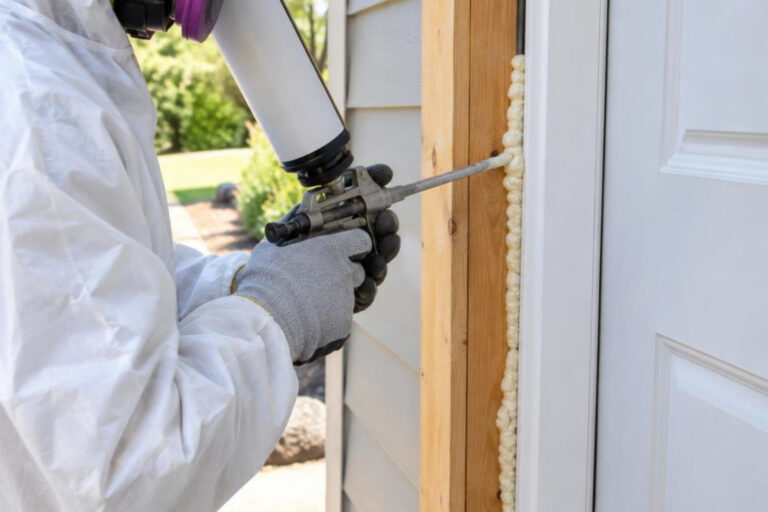
- Application: Technicians wearing full personal protective equipment (respirators, protective suits, hoods, and gloves) spray the liquid components. The material expands within seconds to form a continuous thermal and air barrier.
- Curing and Cleanup: The area is thoroughly cleaned and ventilated. Technicians follow product-specific curing and re-entry guidelines to ensure the space is fully prepped before homeowners return.
Signs It Is Time for Spray Foam Insulation in Jacksonville, FL
If you are unsure whether your current insulation is performing as it should, look out for these common warning signs:
- Hot Upstairs Rooms: Second-story bedrooms or bonus rooms over garages feel noticeably warmer than the ground floor during mid-afternoon.
- Constant AC Cycles: Your cooling system runs non-stop on hot afternoons yet struggles to bring indoor temperatures down to the thermostat setting.
- Uneven Temperatures: Significant temperature swings from room to room, especially in rooms with cathedral ceilings or exterior-facing walls.
- High Cooling Expenses: Noticeable spikes in your electric bill during the warm months, caused by the cooling equipment compensating for severe heat gain.
- Musty Crawl Spaces: High humidity levels or persistent damp odors originating below your first-floor subflooring.
Cost Factors
The overall investment for a spray foam project depends on several structural and logistical variables:
- Total Surface Area: The square footage of the roof deck, crawl space subfloor, or exterior wall framing being insulated.
- Foam Type and Thickness: The selected depth of open-cell or closed-cell foam needed to meet your desired thermal performance and code requirements.
- Preparation and Removal: Whether existing, compressed fiberglass or blown-in insulation must be extracted and disposed of prior to spraying.
- Accessibility: The pitch, height, and complexity of the attic rafters or crawl space clearances.
Because every structure has unique dimensions and access conditions, we provide detailed, itemized estimates following an in-person assessment rather than standard generalized pricing.
[Pro tip:] Before approving the quote, ask the contractor to mark which surfaces will be insulated and list any removal work separately. Keep that scope handy when reviewing the finished work.
How to Choose a Contractor for Spray Foam Insulation in Jacksonville, FL

Installing spray foam requires precise chemical ratios, specialized heating and pumping rigs, and experienced application techniques. When evaluating local contractors in Northeast Florida, consider the following standards:
- Owner-Operated Quality Control: Ask whether the company uses in-house technicians or subcontracts the work. Having an experienced owner on-site ensures accountability and consistent craftsmanship.
- Comprehensive Material Options: A trustworthy contractor should install both spray foam and fiberglass, allowing them to recommend the solution that genuinely matches your property’s needs.
- Transparent Safety Protocols: Ensure the crew uses proper containment, high-output ventilation fans, and certified protective equipment during the installation.
- Verified Customer Feedback: Look for an established local reputation with strong community feedback across Jacksonville and surrounding coastal towns.
Frequently Asked Questions About Spray Foam Insulation
How long does spray foam insulation last once installed?
When applied to clean, dry surfaces protected from direct ultraviolet (UV) sunlight and physical damage, spray foam maintains its shape and structure indefinitely. Unlike loose-fill materials that can settle, shift, or pack down over decades, cured spray foam remains firmly adhered in place.
Can spray foam insulation be installed in existing homes?
Yes. Spray foam is commonly installed as a retrofit solution in existing homes. The most frequent retrofit involves removing old attic floor insulation and applying open-cell foam directly to the underside of the roof deck, converting the attic into a semi-conditioned space. It is also routinely applied beneath crawl spaces or added during major kitchen and bath remodels. You can explore our full range of residential and commercial upgrades through our insulation services.
How much downtime is required after spraying foam?
Downtime varies depending on the specific product formulation and the scope of work. During the application and initial curing period, safety protocols require active ventilation, and occupants must remain out of the building. Your installation crew will provide clear, product-specific guidance on the necessary evacuation window and re-entry times for your project.
Conclusion
Upgrading your home’s thermal boundary with professional spray foam insulation helps tame Northeast Florida’s intense summer heat, lower cooling demand on your HVAC system, and improve everyday comfort across every room.
At Clark Spray Foam, we are a family-owned insulation contractor with over 15 years of industry experience and a 5-star Google rating. Owner Michael Clark is on every job, and we never use subcontractors—delivering dependable craftsmanship for residential, commercial, industrial, and agricultural properties throughout Jacksonville, St. Augustine, Ponte Vedra, Fernandina Beach, and the surrounding areas.
Contact us Monday through Friday, 6 AM to 8 PM, by calling (904) 885-9983 or request a free estimate online today.