
Wall Insulation in Jacksonville, FL
Spray foam or fiberglass batts for new construction, additions and renovations, installed while your walls are open and easy to reach.
- Family Owned & Operated
- Owner On Every Job
- 5-Star Rated On Google
The Best Time to Insulate Walls Is While They're Open
Wall insulation is easiest to get right when the studs are exposed. That happens in new construction, when you build an addition, or during a remodel that takes walls down to the framing.
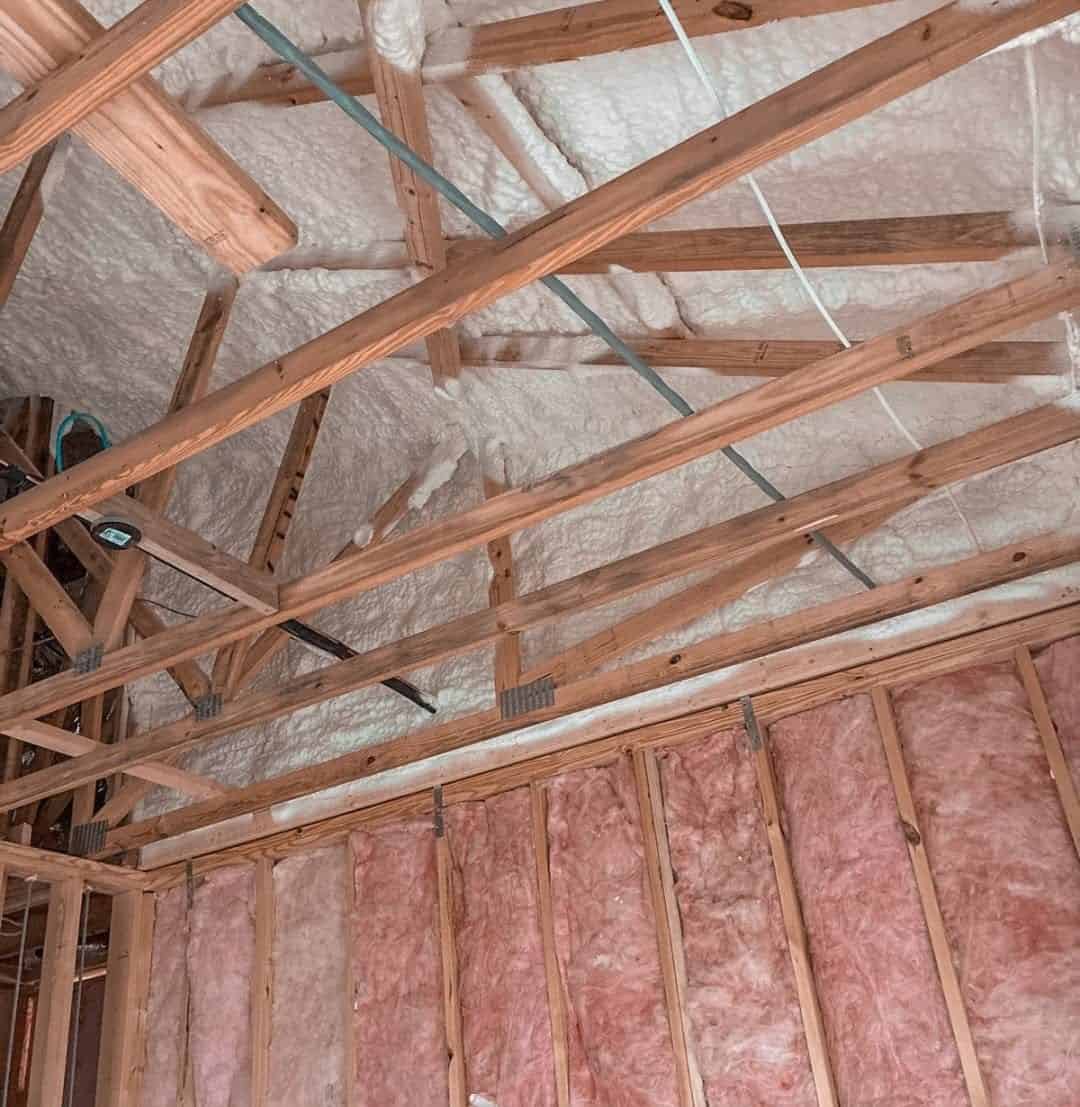
In new construction, insulation goes in after the framing and rough-in work and before drywall. At that stage, we can reach every stud bay and seal the gaps around outlets, top plates and penetrations that are hard to get to later.
Clark Spray Foam insulates walls for homes and businesses across Jacksonville and Northeast Florida. If you’re planning a build or a remodel, the open-wall stage is the time to call us.

Your Wall Insulation Options
We install both spray foam and fiberglass batts, so we can recommend what fits your project.
Open-cell spray foam
Soft and flexible, with about R-3.6 per inch. It air-seals the wall cavity and absorbs sound well, which makes it a good fit for interior walls and living spaces.
Closed-cell spray foam
Rigid, with about R-6 per inch, and it adds racking strength to the wall. It does not absorb water and acts as a vapor retarder at about 2 inches. Our open-cell vs. closed-cell spray foam guide compares the two.
Fiberglass batts
Batts fit between the studs and add R-value, but fiberglass does not stop air movement on its own. Learn more about fiberglass insulation.

Air Sealing Matters as Much as R-Value
A wall can meet its R-value and still leak air. Gaps around electrical outlets, along top plates, and where pipes and wires pass through the framing let humid outside air move in and conditioned air move out.
Spray foam insulates and air-seals in one step. It expands to fill the cavity and seal those gaps as it goes in. Fiberglass batts add R-value, but they don’t stop air movement on their own.
- Outlets and switch boxes on exterior walls
- Top plates where walls meet the attic
- Plumbing and wiring penetrations
- Gaps and cracks around framing
How Wall Insulation Fits Into Your Project
Whether it’s a new home, an addition, or a renovation, the order of work is what makes it go smoothly.
Framing and rough-in
The framing goes up and the rough-in work is completed so the wall cavities are ready for insulation.
Choose your insulation
We talk through spray foam and fiberglass batts, and where open-cell or closed-cell makes sense, based on your goals for comfort, noise and moisture.
Insulate and seal
Our own crew installs the insulation and seals the openings around outlets, top plates and penetrations. We never subcontract.
Ready for drywall
Once the walls are insulated, drywall can go up. Customers often mention our clean job sites and clear communication. For full builds, see new construction insulation.
Code Minimums, Comfort and Quieter Rooms
Jacksonville is in IECC climate zone 2, a hot-humid climate. The Florida Building Code’s prescriptive minimum for wood-frame walls in new zone 2 homes is R-13. We’ll talk through which insulation type fits your walls and your goals.
Wall insulation can also make rooms quieter. Open-cell foam absorbs sound well, which helps between bedrooms, home offices and living spaces, and against noise from traffic or neighbors. Learn more about sound wall insulation.
Clark Spray Foam is family owned, with over 15 years in the insulation industry. Request a quote online and get 10% off your project, with financing available through Acorn Finance.
Our Recent Work
A few photos from recent Clark Spray Foam jobs. Our own crew does every one, with the owner on site.


Why Choose Clark Spray Foam
Family Owned & Operated
Owner Michael Clark is on every job, so you’re never handed off after the quote.
We Never Subcontract
Our own crew does every job, start to finish.
Over 15 Years of Experience
Over 15 years in the industry, serving homes and businesses across Northeast Florida.
Free Quotes & Financing
Request a quote online and get 10% off your project. Financing through Acorn Finance.
What Our Customers Say
5-star rated on Google. Customers often mention our punctual, professional crews, clean job sites and clear communication.


 Trustindex verifies that the original source of the review is Google.
 Trustindex verifies that the original source of the review is Google.
 Trustindex verifies that the original source of the review is Google.
 Trustindex verifies that the original source of the review is Google.
 Trustindex verifies that the original source of the review is Google.
 Trustindex verifies that the original source of the review is Google.
 Trustindex verifies that the original source of the review is Google.
 Trustindex verifies that the original source of the review is Google.
 Trustindex verifies that the original source of the review is Google.
 Trustindex verifies that the original source of the review is Google.
 Trustindex verifies that the original source of the review is Google.
 Trustindex verifies that the original source of the review is Google.
 Trustindex verifies that the original source of the review is Google.
 Trustindex verifies that the original source of the review is Google.
 Trustindex verifies that the original source of the review is Google.
 Trustindex verifies that the original source of the review is Google.
 Trustindex verifies that the original source of the review is Google.
 Trustindex verifies that the original source of the review is Google.
 Trustindex verifies that the original source of the review is Google.
 Trustindex verifies that the original source of the review is Google.
 Trustindex verifies that the original source of the review is Google.
 Trustindex verifies that the original source of the review is Google.
 Trustindex verifies that the original source of the review is Google.
 Trustindex verifies that the original source of the review is Google.
 Trustindex verifies that the original source of the review is Google.
 Trustindex verifies that the original source of the review is Google.
 Trustindex verifies that the original source of the review is Google.
 Trustindex verifies that the original source of the review is Google.
 Trustindex verifies that the original source of the review is Google.
 Trustindex verifies that the original source of the review is Google.
 Trustindex verifies that the original source of the review is Google.
 Trustindex verifies that the original source of the review is Google.
 Trustindex verifies that the original source of the review is Google.
 Trustindex verifies that the original source of the review is Google.
 Trustindex verifies that the original source of the review is Google.
Wall Insulation FAQs
What is the best insulation for walls in Jacksonville?
Spray foam is often the best choice for walls in a hot-humid climate because it insulates and air-seals in one step. Open-cell absorbs sound well and suits interior walls and living spaces, while closed-cell offers about R-6 per inch and does not absorb water. Fiberglass batts are another option, but they don’t stop air movement on their own.
How much insulation do walls need in Florida?
The Florida Building Code’s prescriptive minimum for wood-frame walls in new climate zone 2 homes is R-13. Spray foam and fiberglass batts are both options for wall cavities. Air sealing matters just as much as the R-value, which is why we seal gaps around outlets, top plates and penetrations as we insulate.
Can I insulate my walls during a remodel?
Yes, a remodel that takes walls down to the framing is one of the best times to insulate them. With the studs exposed, every cavity can be filled completely and the gaps around outlets, top plates and penetrations can be sealed before new drywall goes up. If you’re planning a renovation, talk to us before the walls are closed back in.
When does insulation go in during new construction?
Insulation goes in after the framing and rough-in work and before drywall. At that point every stud bay is open, so the crew can fill the cavities and seal gaps around outlets, top plates and penetrations. Once the walls are insulated, drywall can go up.
Is spray foam or fiberglass better for walls?
Spray foam does more than fiberglass because it insulates and air-seals in one step. It fills the wall cavity and seals the gaps around outlets, top plates and penetrations. Fiberglass batts add R-value but don’t stop air movement on their own. Spray foam can save up to 50% on energy costs and won’t shift, settle or deteriorate over time.
Does wall insulation reduce noise?
Yes, wall insulation can reduce noise between rooms and from outside sources like traffic or neighbors. Open-cell spray foam absorbs sound well, which makes it a good fit for walls around bedrooms, home offices, work and study areas, and other living spaces. We install sound wall insulation in both homes and commercial spaces.
Related Services
Spray foam and fiberglass for new homes, additions and commercial builds.
Quieter rooms, with less noise between spaces and from traffic or neighbors.
An honest side-by-side of the two types of spray foam and where each belongs.
Blown-in fiberglass and batts for vented attics, walls and open framing.
Get Your Free Quote
Request a quote online and get 10% off your project. Prefer to talk it through? Call us Monday through Friday, 8 AM to 5 PM.
- Family owned, owner on every job
- We never subcontract
- Financing available
- Serving Jacksonville, St. Augustine, Fernandina Beach, Ponte Vedra and surrounding Northeast Florida