
Attic Insulation in Jacksonville, FL
Spray foam under the roof deck or blown-in fiberglass on the attic floor. We’ll help you pick the right option for your home and install it with our own crew.
- Family Owned & Operated
- Owner On Every Job
- 5-Star Rated On Google
Your Attic Does More Work Than You Think
In a Jacksonville summer, the attic is where much of your home’s heat problem starts. The sun beats on the roof all day, and that heat moves down into the rooms below unless the attic is properly insulated and sealed.
In many Florida homes, the AC air handler and ductwork also sit in the attic. That means your cooling system is working inside the hottest space in the house, which makes the attic one of the most important places to get insulation right.
Clark Spray Foam offers two main approaches to attic insulation: spray foam on the underside of the roof deck, or blown-in fiberglass on the attic floor. Each one works differently, and the right choice depends on your home and your goals.

Two Ways to Insulate Your Attic
The big difference is where the insulation goes and whether the attic stays vented.
Spray foam on the roof deck (sealed attic)
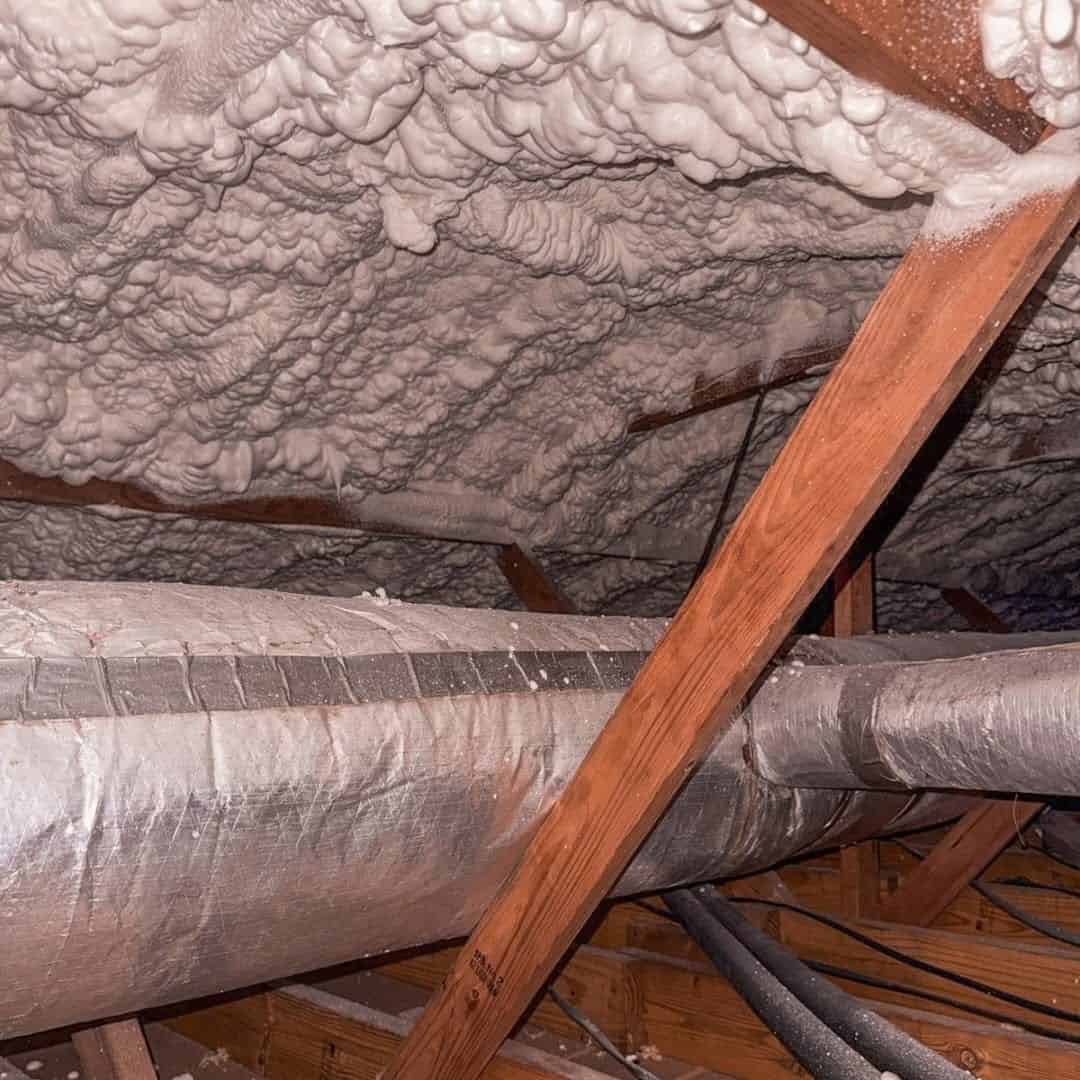
Spray foam applied to the underside of the roof deck seals the attic and brings it inside your home’s conditioned space. Your air handler and ducts then sit in a much cooler space instead of a hot, vented attic.
Blown-in fiberglass on the attic floor (vented attic)
Blown-in fiberglass is spread across the attic floor, above your ceilings. The attic stays vented and hot, but the insulation slows heat moving into the living space below. See our blown-in fiberglass insulation page for details.
Which spray foam goes on the roof deck?
Open-cell spray foam is often used along roof decks, though the right type depends on the home. Our open-cell vs. closed-cell spray foam guide explains the differences.

How Much Attic Insulation Do You Need?
Northeast Florida is in IECC climate zone 2, a hot-humid climate. For homes in zone 2, ENERGY STAR recommends R-49 for an uninsulated attic and R-38 when you’re adding to an attic that already has 3–4 inches of insulation. The Florida Building Code’s prescriptive minimum for ceilings in new zone 2 homes is R-38.
R-value is only part of the picture. Air sealing gaps and cracks matters just as much. Spray foam insulates and air-seals in one step, while fiberglass does not stop air movement on its own.
Signs Your Attic Needs Work
If any of these sound familiar, it’s worth taking a look in the attic.
Hot upstairs rooms
Bedrooms and bonus rooms under the roof that stay hot all summer usually point to an attic that isn’t keeping heat out.
AC running constantly
If your system seems to run nonstop on summer afternoons, heat from the attic may be overwhelming it, especially when the air handler and ducts are up there too.
Thin or patchy insulation
You can see the ceiling joists, or the insulation is uneven, with bare spots near the edges or around the attic access.
Damaged insulation
Insulation that is wet, matted, stained, or disturbed by rodents or insects no longer performs the way it should.
When Old Insulation Should Come Out First
Not every attic is ready for new insulation. If the existing insulation has mold or mildew from moisture, pest damage, absorbed odors from smoke or pets, or a buildup of dust and allergens, it’s usually best to remove it before adding anything new.
Removal can also make sense when you’re switching approaches, such as moving from loose insulation on the attic floor to spray foam on the roof deck. Learn more about our attic insulation removal service.
Clark Spray Foam is family owned, with over 15 years in the insulation industry. The owner, Michael Clark, is on every job, and our own crew does all the work. Request a quote online and get 10% off your project, with financing available through Acorn Finance.
Our Recent Work
A few photos from recent Clark Spray Foam jobs. Our own crew does every one, with the owner on site.


Why Choose Clark Spray Foam
Family Owned & Operated
Owner Michael Clark is on every job, so you’re never handed off after the quote.
We Never Subcontract
Our own crew does every job, start to finish.
Over 15 Years of Experience
Over 15 years in the industry, serving homes and businesses across Northeast Florida.
Free Quotes & Financing
Request a quote online and get 10% off your project. Financing through Acorn Finance.
What Our Customers Say
5-star rated on Google. Customers often mention our punctual, professional crews, clean job sites and clear communication.


 Trustindex verifies that the original source of the review is Google.
 Trustindex verifies that the original source of the review is Google.
 Trustindex verifies that the original source of the review is Google.
 Trustindex verifies that the original source of the review is Google.
 Trustindex verifies that the original source of the review is Google.
 Trustindex verifies that the original source of the review is Google.
 Trustindex verifies that the original source of the review is Google.
 Trustindex verifies that the original source of the review is Google.
 Trustindex verifies that the original source of the review is Google.
 Trustindex verifies that the original source of the review is Google.
 Trustindex verifies that the original source of the review is Google.
 Trustindex verifies that the original source of the review is Google.
 Trustindex verifies that the original source of the review is Google.
 Trustindex verifies that the original source of the review is Google.
 Trustindex verifies that the original source of the review is Google.
 Trustindex verifies that the original source of the review is Google.
 Trustindex verifies that the original source of the review is Google.
 Trustindex verifies that the original source of the review is Google.
 Trustindex verifies that the original source of the review is Google.
 Trustindex verifies that the original source of the review is Google.
 Trustindex verifies that the original source of the review is Google.
 Trustindex verifies that the original source of the review is Google.
 Trustindex verifies that the original source of the review is Google.
 Trustindex verifies that the original source of the review is Google.
 Trustindex verifies that the original source of the review is Google.
 Trustindex verifies that the original source of the review is Google.
 Trustindex verifies that the original source of the review is Google.
 Trustindex verifies that the original source of the review is Google.
 Trustindex verifies that the original source of the review is Google.
 Trustindex verifies that the original source of the review is Google.
 Trustindex verifies that the original source of the review is Google.
 Trustindex verifies that the original source of the review is Google.
 Trustindex verifies that the original source of the review is Google.
 Trustindex verifies that the original source of the review is Google.
 Trustindex verifies that the original source of the review is Google.
Attic Insulation FAQs
What is the best attic insulation for Jacksonville homes?
The best attic insulation depends on whether you want a sealed or vented attic. Spray foam on the underside of the roof deck seals the attic and brings your air handler and ducts inside the conditioned space. Blown-in fiberglass on the attic floor keeps the attic vented and slows heat moving into your rooms. We’ll recommend the right fit for your home.
How much attic insulation do I need in Northeast Florida?
For climate zone 2 homes, ENERGY STAR recommends R-49 for an uninsulated attic. If your attic already has 3–4 inches of insulation, the recommendation for adding to it is R-38. The Florida Building Code’s prescriptive minimum for ceilings in new zone 2 homes is also R-38.
Why spray foam the roof deck instead of the attic floor?
Spray foaming the roof deck brings the attic inside your home’s conditioned space instead of leaving it vented and hot. In many Florida homes the AC air handler and ductwork sit in the attic, so sealing the roof deck puts that equipment in a much cooler space. Insulation on the attic floor keeps the attic itself hot.
Do I need to remove old attic insulation before adding new?
You should remove old attic insulation when it’s damaged or contaminated. Mold or mildew from moisture, rodent or insect damage, absorbed smoke or pet odors, and built-up dust are all good reasons to take it out first. Removal can also make sense when you’re switching to spray foam on the roof deck. Insulation that’s simply thin can often be added to.
How do I know if my attic insulation is failing?
Hot upstairs rooms and an AC that seems to run constantly are the most common signs of failing attic insulation. In the attic itself, look for thin or patchy coverage, visible ceiling joists, or insulation that’s wet, matted or damaged by pests. Any of these means the attic isn’t keeping summer heat out of your home.
Can attic spray foam lower my energy bills?
Yes, spray foam can save up to 50% on energy costs. It insulates and air-seals in one step, which helps keep summer heat and humidity out of your home. Spray foam can also help extend the life of your AC, and it won’t shift, settle or deteriorate over time.
Related Services
Rodent-damaged, moldy or matted attic insulation cleared out for a fresh start.
Top up thin or settled attic insulation to recommended levels.
An honest side-by-side of the two types of spray foam and where each belongs.
For hot upstairs rooms, high bills and humidity, in new homes and existing ones.
Get Your Free Quote
Request a quote online and get 10% off your project. Prefer to talk it through? Call us Monday through Friday, 8 AM to 5 PM.
- Family owned, owner on every job
- We never subcontract
- Financing available
- Serving Jacksonville, St. Augustine, Fernandina Beach, Ponte Vedra and surrounding Northeast Florida