
Crawl Space Insulation in Jacksonville, FL
Closed-cell spray foam for crawl spaces and subfloors, installed by our own crew to help block humid air and moisture coming from below your home.
- Family Owned & Operated
- Owner On Every Job
- 5-Star Rated On Google
What's Happening Under Your Floors
If your home is built over a crawl space, the floor you walk on every day sits directly above outside air. In Jacksonville, that air is humid most of the year, and the ground underneath adds moisture of its own.
When the subfloor isn’t properly insulated and sealed, that humid air and moisture from below work their way into your home. You may notice it as floors that feel cold in winter or clammy underfoot, or as a home that’s harder to keep comfortable.
Clark Spray Foam insulates crawl spaces and subfloors with closed-cell spray foam, a material that holds up well in the damp conditions under a home.

Signs Your Crawl Space Needs Attention
You don’t have to crawl under the house to spot some of these.
Cold or clammy floors
Floors that feel cold on winter mornings or slightly damp underfoot are often the first sign the subfloor isn’t insulated or sealed well.
Humid air and moisture below
Damp wood, condensation or wet surfaces in the crawl space mean humid air and ground moisture are reaching the underside of your home.
Damaged or missing insulation
Insulation under the floor that’s wet, missing in sections, or damaged by moisture, pests or age no longer does its job.
Mold or mildew on old insulation
Mold or mildew from moisture is a clear sign the old insulation should come out. Our insulation removal service clears it before new insulation goes in.

Why Closed-Cell Spray Foam Fits Crawl Spaces
Crawl spaces are one of the places where moisture decides the material. Closed-cell spray foam does not absorb water, and at about 2 inches it acts as a vapor retarder. It’s also rigid and offers about R-6 per inch, so it delivers solid R-value without needing much depth.
Open-cell foam, by contrast, can absorb water and is not a vapor retarder, so it’s better suited to drier spaces like attics. Customers often mention our crew explained this difference, and that we used closed-cell in their crawl space. Our open-cell vs. closed-cell spray foam comparison goes into more detail.
Spray foam also insulates and air-seals in one step. Fiberglass batts under a floor do not stop air movement on their own, so humid air can still move through and around them.
- Does not absorb water
- Acts as a vapor retarder at about 2 inches
- About R-6 per inch
- Insulates and air-seals in one step
- Helps reduce the risk of mold and humidity problems
How We Insulate a Crawl Space
Every crawl space is different, so the plan starts with a look underneath.
Inspect the crawl space
We check the subfloor, the crawl space walls, any existing insulation, and signs of moisture or pest damage.
Remove damaged insulation if needed
If old insulation is wet, moldy, or damaged by pests, we take it out first so the new foam goes onto a clean surface.
Choose subfloor or walls
Depending on how your crawl space is built, we apply closed-cell spray foam to the underside of the subfloor or to the crawl space walls.
Spray and clean up
Our own crew installs the foam and leaves the work area clean. Customers often mention our punctual, professional crews and clear communication.
How Much Insulation Does a Floor Need?
Northeast Florida is in IECC climate zone 2, a hot-humid climate. For floors in zone 2, ENERGY STAR recommends R-13. Because closed-cell spray foam is about R-6 per inch, it reaches that level without a thick layer.
Clark Spray Foam is family owned, with over 15 years in the insulation industry, and the owner, Michael Clark, is on every job. If your crawl space is part of a bigger project, see our residential spray foam insulation services. Request a quote online and get 10% off your project.
Our Recent Work
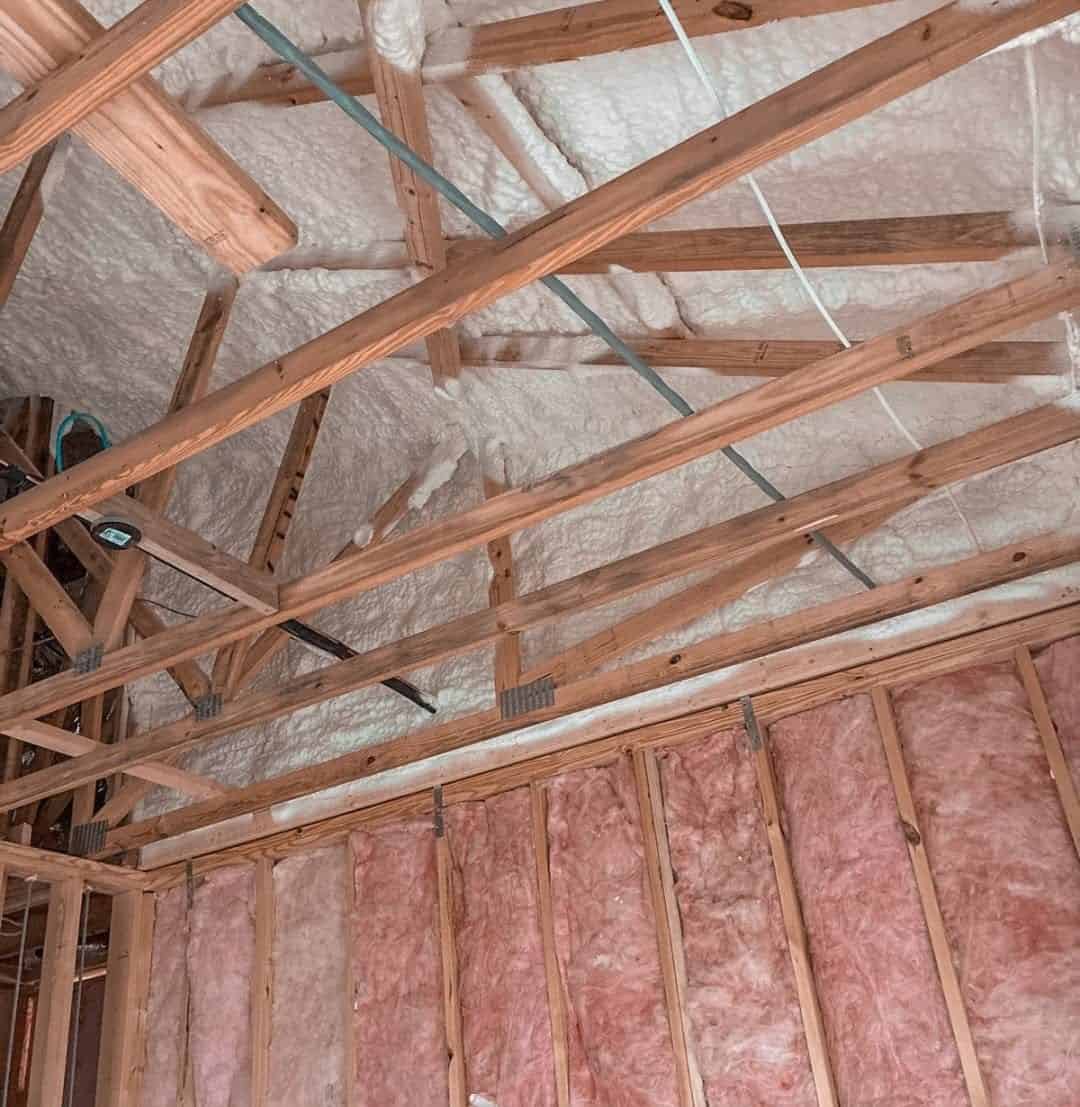
A few photos from recent Clark Spray Foam jobs. Our own crew does every one, with the owner on site.


Why Choose Clark Spray Foam
Family Owned & Operated
Owner Michael Clark is on every job, so you’re never handed off after the quote.
We Never Subcontract
Our own crew does every job, start to finish.
Over 15 Years of Experience
Over 15 years in the industry, serving homes and businesses across Northeast Florida.
Free Quotes & Financing
Request a quote online and get 10% off your project. Financing through Acorn Finance.
What Our Customers Say
5-star rated on Google. Customers often mention our punctual, professional crews, clean job sites and clear communication.


 Trustindex verifies that the original source of the review is Google.
 Trustindex verifies that the original source of the review is Google.
 Trustindex verifies that the original source of the review is Google.
 Trustindex verifies that the original source of the review is Google.
 Trustindex verifies that the original source of the review is Google.
 Trustindex verifies that the original source of the review is Google.
 Trustindex verifies that the original source of the review is Google.
 Trustindex verifies that the original source of the review is Google.
 Trustindex verifies that the original source of the review is Google.
 Trustindex verifies that the original source of the review is Google.
 Trustindex verifies that the original source of the review is Google.
 Trustindex verifies that the original source of the review is Google.
 Trustindex verifies that the original source of the review is Google.
 Trustindex verifies that the original source of the review is Google.
 Trustindex verifies that the original source of the review is Google.
 Trustindex verifies that the original source of the review is Google.
 Trustindex verifies that the original source of the review is Google.
 Trustindex verifies that the original source of the review is Google.
 Trustindex verifies that the original source of the review is Google.
 Trustindex verifies that the original source of the review is Google.
 Trustindex verifies that the original source of the review is Google.
 Trustindex verifies that the original source of the review is Google.
 Trustindex verifies that the original source of the review is Google.
 Trustindex verifies that the original source of the review is Google.
 Trustindex verifies that the original source of the review is Google.
 Trustindex verifies that the original source of the review is Google.
 Trustindex verifies that the original source of the review is Google.
 Trustindex verifies that the original source of the review is Google.
 Trustindex verifies that the original source of the review is Google.
 Trustindex verifies that the original source of the review is Google.
 Trustindex verifies that the original source of the review is Google.
 Trustindex verifies that the original source of the review is Google.
 Trustindex verifies that the original source of the review is Google.
 Trustindex verifies that the original source of the review is Google.
 Trustindex verifies that the original source of the review is Google.
Crawl Space Insulation FAQs
What is the best insulation for a crawl space in Florida?
Closed-cell spray foam is usually the best insulation for a Florida crawl space because it does not absorb water. At about 2 inches it also acts as a vapor retarder, which matters in a humid climate like Jacksonville’s where moisture comes from both the air and the ground. It insulates and air-seals in one step and provides about R-6 per inch.
Why are my floors cold or clammy?
Cold or clammy floors usually mean the subfloor above your crawl space isn’t properly insulated and sealed. Outside air and moisture from below reach the underside of the floor and make it feel cold in winter or damp underfoot. Insulating the subfloor or crawl space walls with closed-cell spray foam helps block that air and moisture.
How much insulation does a floor over a crawl space need?
ENERGY STAR recommends R-13 for floors in climate zone 2, which includes Jacksonville. Closed-cell spray foam provides about R-6 per inch, so it reaches that level without needing much depth. That’s useful in crawl spaces, where there often isn’t much room to work.
Do you insulate the subfloor or the crawl space walls?
We insulate either the underside of the subfloor or the crawl space walls, depending on how your crawl space is built. After inspecting the space, we’ll explain which approach fits your home and why. Either way, we use closed-cell spray foam because it does not absorb water and acts as a vapor retarder at about 2 inches.
Can crawl space insulation help with mold?
Closed-cell spray foam can help reduce the risk of mold and humidity problems under your home. It does not absorb water and acts as a vapor retarder at about 2 inches, which helps limit the moisture reaching your subfloor. If old insulation already has mold or mildew from moisture, we recommend removing it before new foam goes in.
Why not use fiberglass batts under the floor?
Fiberglass batts don’t stop air movement on their own, so humid crawl space air can still pass through and around them. Closed-cell spray foam insulates and air-seals in one step, does not absorb water, and acts as a vapor retarder at about 2 inches. In a damp crawl space, those qualities make a real difference.
Related Services
An honest side-by-side of the two types of spray foam and where each belongs.
For hot upstairs rooms, high bills and humidity, in new homes and existing ones.
Old, damaged or contaminated insulation of any type, removed and replaced.
Gaps, wet spots and areas disturbed by other trades, fixed without starting over.
Get Your Free Quote
Request a quote online and get 10% off your project. Prefer to talk it through? Call us Monday through Friday, 8 AM to 5 PM.
- Family owned, owner on every job
- We never subcontract
- Financing available
- Serving Jacksonville, St. Augustine, Fernandina Beach, Ponte Vedra and surrounding Northeast Florida