Quick Answer
A wildlife professional should confirm that raccoons and any young are out and address entry points before insulation work begins. An insulation contractor should then assess the damage, remove affected material, and plan replacement. Full removal is not always needed; the extent of the damage determines whether localized removal or a larger project is appropriate.
What to Do With Raccoon-Damaged Attic Insulation
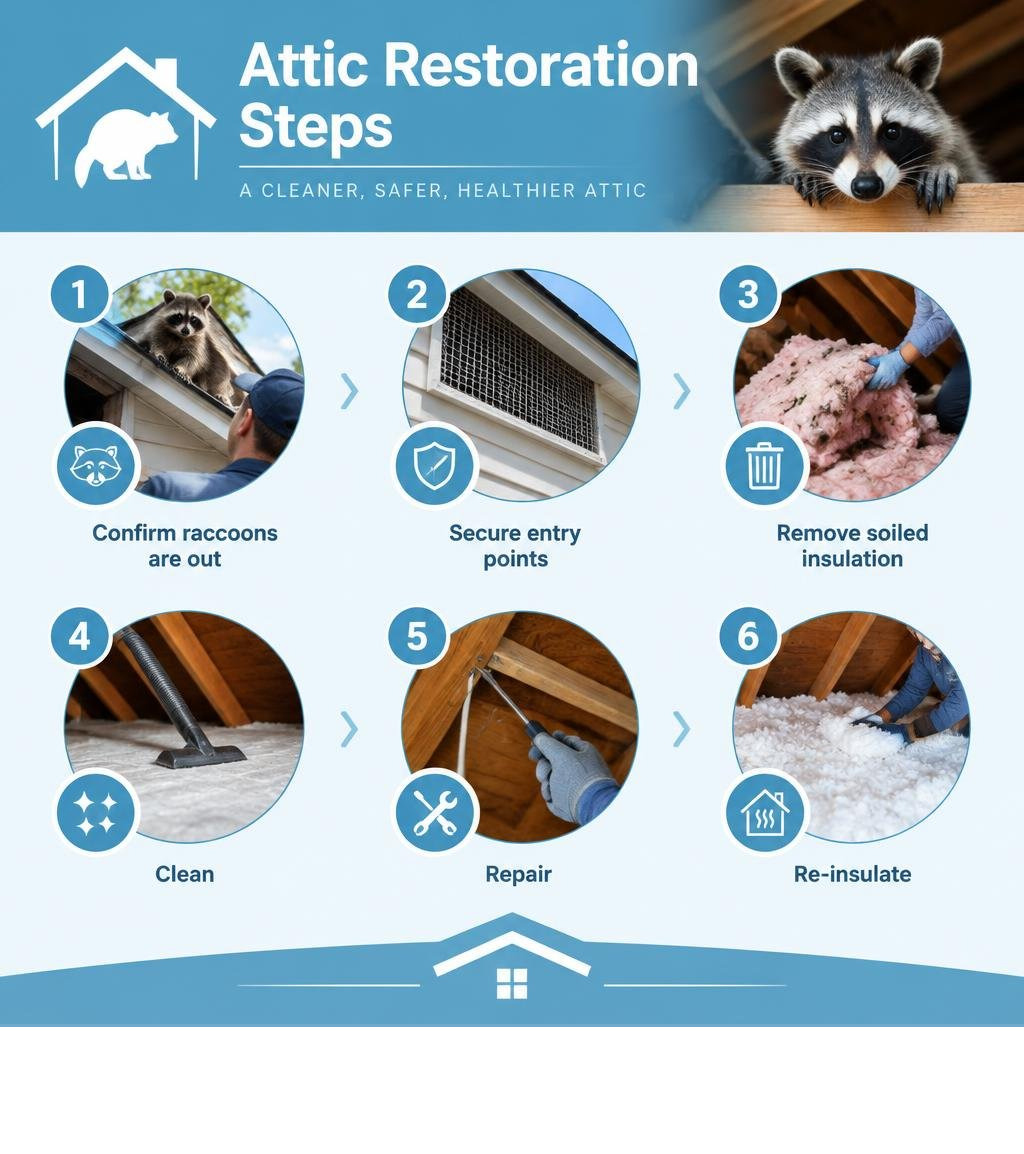
For insulation removal for raccoon damage, start by having a wildlife professional confirm that the raccoons and any young are out, then secure their entry points. Have soiled or torn insulation removed, the exposed area cleaned, and any roof, duct, or wiring damage checked before installing new insulation. Ask a qualified wildlife-cleanup professional to assess any waste before insulation work begins.
Not every attic needs a full removal; the extent of contamination determines how much insulation must go. In Jacksonville’s hot, humid climate, restoring the insulation also helps your AC keep upstairs rooms comfortable. Clark Spray Foam can assess the insulation and explain your removal and replacement options once the wildlife problem is resolved.
Signs of Raccoon Activity and Attic Contamination

If you hear unexplained attic noises, ask a wildlife professional to identify the cause before arranging insulation work.
Ask a wildlife professional to identify entry points and recommend repairs. Have any suspected roof damage assessed before new insulation is installed.
During the assessment, ask professionals to check insulation condition, ductwork, wiring, and any visible waste or staining. Refer suspected electrical or structural damage to the appropriate trade.
Assessing Soiled or Damaged Insulation
Have a qualified cleanup professional assess soiling, and ask the insulation contractor to identify which materials need removal. Arrange a separate assessment of any suspected damage to the ceiling or framing.
Matted or compressed insulation may not perform as intended, and rooms below may feel hotter or require more AC operation. If the damage is localized to a small corner with minimal animal contact, targeted insulation repair might be an option. If an inspection finds widespread damage or contamination, discuss whether full removal is appropriate.
Professional Assessment and Insulation Removal for Raccoon Damage

Ask a qualified wildlife-cleanup professional to assess waste before insulation work. Clark Spray Foam offers professional attic insulation removal and can inspect the insulation to recommend removal and replacement options.
Assessing Cleanup Needs
Ask a qualified wildlife-cleanup professional to assess any waste and explain the cleanup needed before insulation replacement.
Insulation Performance and Moisture Assessment
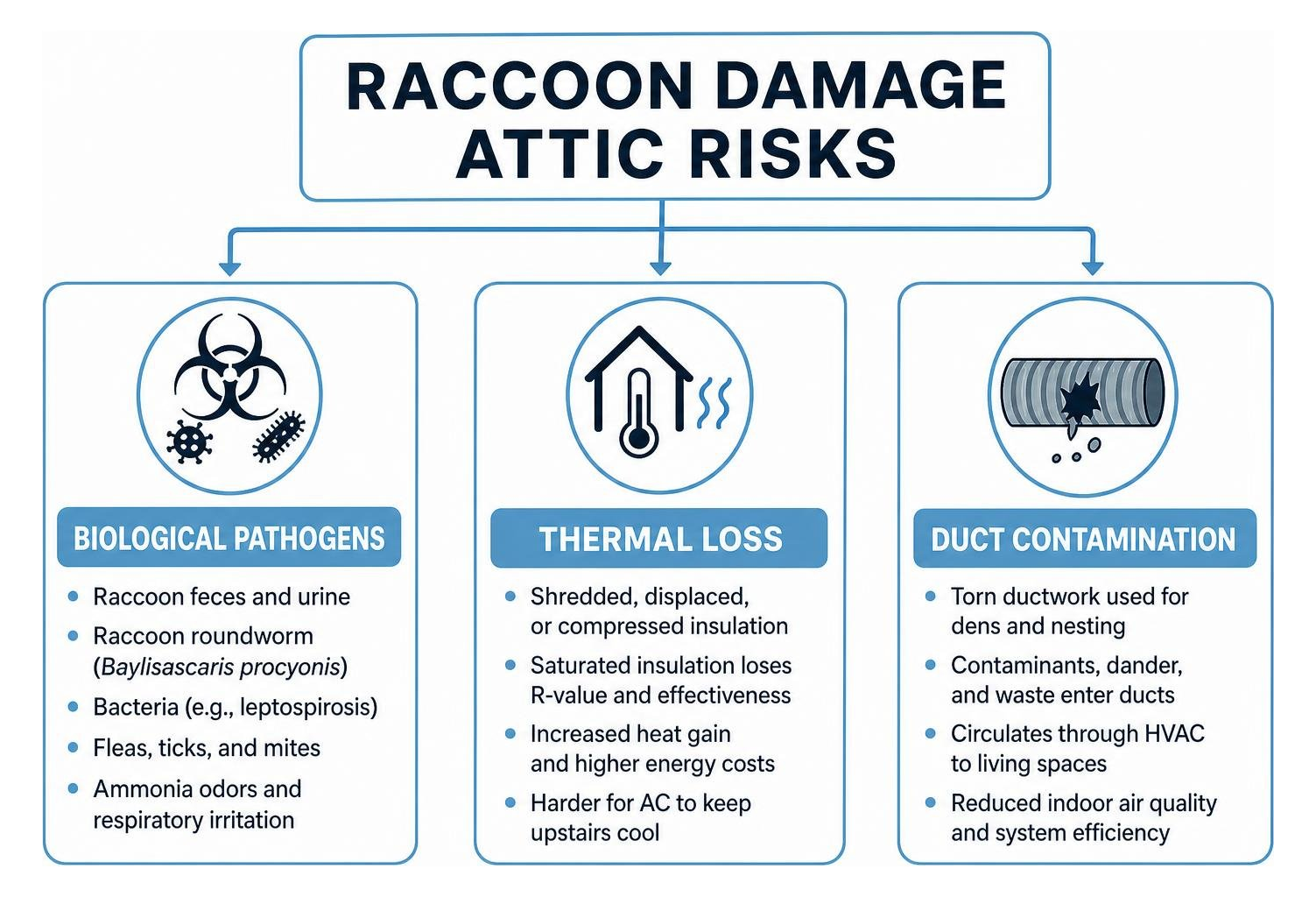
Damaged, displaced, or compressed insulation can leave uneven coverage. An inspection can identify areas needing repair or replacement to help limit heat gain and AC load.
If insulation is wet, have the moisture source assessed before replacement. Our guide to removing wet insulation discusses the insulation-removal step.
Planning Attic Insulation Removal and Replacement
Coordinate any wildlife assessment, cleanup, and entry-point repairs with the insulation removal and replacement plan.
Planning Insulation Removal for Raccoon Damage
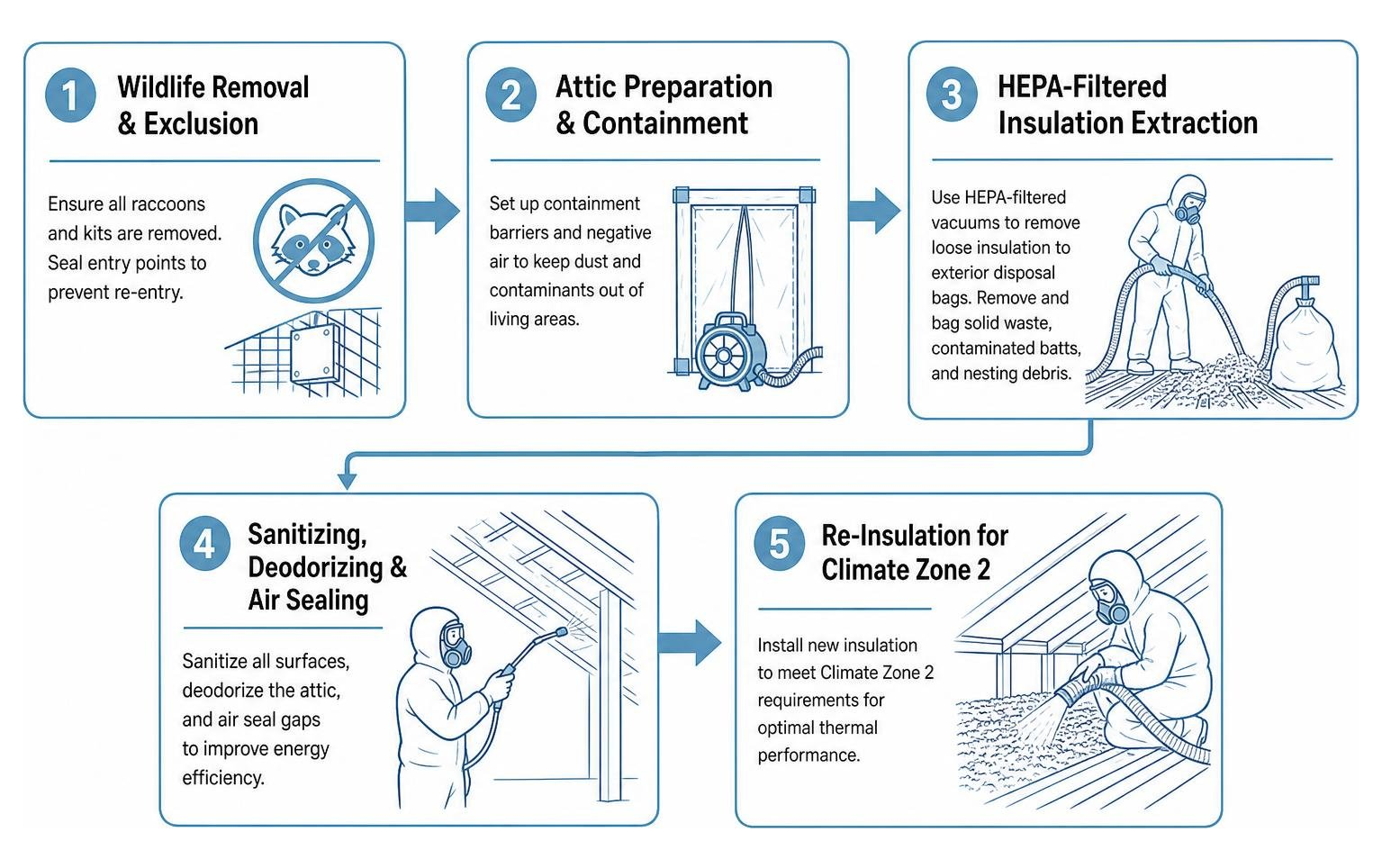
Before insulation work begins, ask a wildlife professional to assess the attic and address any remaining raccoons or young. Once the attic is clear, ask the insulation contractor how the work area will be contained.
The crew removes the affected insulation and associated debris. After insulation removal, the space is prepared for replacement insulation, with any identified leaks or entry points addressed before installation.
Coordinating Cleanup and Entry-Point Repairs
Ask a qualified wildlife-cleanup professional to specify any necessary cleanup, and have entry-point repairs assessed by the appropriate specialist. Confirm that this work is complete before replacement insulation is installed.
Re-Insulating Your Attic to Restore Energy Efficiency
After affected insulation is removed and any necessary cleanup and repairs are complete, re-insulating restores your home’s thermal boundary. In Northeast Florida (IECC Climate Zone 2), attic insulation must effectively resist persistent outdoor heat and humidity. Installing properly balanced attic insulation can help limit heat gain, reduce AC load, and improve comfort.
Comparing Replacement Materials: spray foam vs. blown-in
Choosing the right insulation material depends on your home’s architectural design, existing ventilation, and budget considerations. Clark Spray Foam installs both modern spray foam and traditional blown-in fiberglass, so you can discuss both options for your home. For gaps and hard-to-reach areas, spray foam can provide air sealing and moisture control; fiberglass is a lower-cost option for adding or topping up suitable existing insulation. Arrange an inspection to choose the approach that fits your building.
| Feature / Benefit | open-cell spray foam | closed-cell spray foam | blown-in fiberglass |
|---|---|---|---|
| Primary Mechanism | Insulation and air sealing | Dense barrier & moisture resistance | Thermal resistance on floor joists |
| Air Sealing Quality | Excellent expansion into gaps | Air sealing in a continuous layer | Requires separate air sealing |
| Moisture Resistance | Permeable to moisture vapor | Highly water-resistant | Replace if water-damaged |
| Best Application | Unvented roof decks | Exposed metal, crawl spaces | Vented attic floor joists |
| Cost Profile | Moderate investment | Premium investment | Budget-friendly option |
For homeowners considering air sealing at the roof deck, residential spray foam insulation applied directly to the underside of the roof deck creates a semi-conditioned attic space. This can help reduce heat buildup around AC equipment located in the attic. Alternatively, blown-in fiberglass remains an effective, budget-conscious choice for standard vented attics when paired with meticulous air sealing.
Attic Restoration Costs, Insurance, and Professional Selection
When budgeting, ask which wildlife, cleanup, entry-repair, and insulation services your project needs and which contractor will handle each. Understanding these individual project elements helps homeowners budget appropriately.
Estimated Costs of Insulation Removal for Raccoon Damage and Attic Restoration
Ask the contractor to assess how much insulation needs removal and which replacement option fits your attic before preparing a quote. Rather than relying on rigid online estimates, homeowners should have the space evaluated in person to identify the precise scope of work needed.
Key factors that influence overall project pricing include:
- Contamination Severity: The extent of affected insulation determines whether localized removal or a larger removal project is appropriate.
- Attic Accessibility and Pitch: Ask how roof height and access constraints affect your quote.
- Separate Cleanup or Repair Work: Ask whether any necessary cleanup or repairs are included in the insulation quote or require another specialist.
- Replacement Material Choice: Upgrading to spray foam insulation involves different material and labor requirements compared to topping off blown-in fiberglass.
To obtain an accurate, upfront project cost, we recommend requesting an on-site evaluation tailored to your attic’s specific layout.
[Pro tip:] Take a photo of the attic access opening from the room below and send it with your quote request so the contractor can discuss access before the visit.
Homeowners Insurance Claims and Coverage Considerations
Review your policy and ask your insurer whether wildlife removal, cleanup, repairs, and insulation replacement are covered. Request an itemized contractor estimate and ask the adjuster what documentation is needed.
Frequently Asked Questions About Raccoon Attic Remediation
Can I disinfect contaminated insulation instead of removing it?
Ask a qualified wildlife-cleanup professional to assess whether cleaning is appropriate. Have an insulation contractor inspect the affected material and recommend removal and replacement where needed.
How should I address possible raccoon entry points?
Have a wildlife professional inspect the roofline and identify entry points. Ask the appropriate specialist to recommend repairs before insulation replacement.
Does homeowners insurance pay for raccoon damage repairs?
Ask your insurer whether your policy covers wildlife-related repairs, insulation replacement, cleanup, and animal removal. Review your policy language and consult with your insurance adjuster to determine your exact coverage terms.
Conclusion
After the wildlife issue is addressed, arrange an insulation inspection to determine what needs removal and replacement. Restoring insulation coverage can help limit heat gain and AC load during Northeast Florida summers.
At Clark Spray Foam, we bring over 15 years of industry experience to every attic restoration project. As a family-owned contractor 5-star rated on Google, owner Michael Clark personally oversees every single job with no subcontractors, ensuring reliable, high-quality workmanship from start to finish. We proudly serve homeowners across Jacksonville, St. Augustine, Ponte Vedra, Fernandina Beach, and the surrounding areas. Contact us by calling (904) 885-9983 or submit a request online to schedule a free quote.