Quick Answer
To choose reliable blown-in insulation companies, verify active general liability insurance and owner-led crew oversight rather than subcontracted labor. Reputable contractors assess existing attic conditions, provide transparent written estimates detailing target R-values, seal air bypasses before blowing loose-fill material, and ensure thorough preparation across the entire attic space.
Introduction
Finding reliable blown-in insulation companies starts with verifying in-house crew employment, direct on-site supervision, comprehensive air sealing practices, and clear written proposals that specify target R-values and material depth. Choosing an experienced contractor ensures your attic gets proper coverage without leaving uninsulated voids or hidden thermal bypasses. In hot, humid climates like Northeast Florida, an attic lacking adequate thermal protection allows radiant heat to penetrate living spaces, forcing cooling systems to work overtime. Adding loose-fill insulation creates a seamless thermal barrier over ceiling joists, filling tiny gaps that traditional materials often miss.
According to building science guidance from energy.gov, properly insulating an existing attic can significantly reduce household heat gain, helping lower utility expenses and easing strain on air conditioning equipment.

Understanding Blown-In Insulation and Its Key Home Benefits

Blown-in insulation consists of loose material that specialized machinery fluffs and pneumatically delivers through a long, flexible hose directly into building cavities. Unlike rigid sheets or pre-cut blankets, loose-fill fibers flow easily around ceiling framing, cross-bracing, recessed lighting housings, and wiring runs.
When added as part of dedicated attic insulation upgrades, the material settles into a uniform thermal blanket. This coverage increases the overall R-value of the ceiling assembly, which measures the material’s resistance to heat flow. In hot, humid climates like Jacksonville, radiant heat builds up rapidly under dark roof decking during the day. A robust layer of blown-in insulation slows that downward heat transfer into the rooms below.
Common signs that an attic requires attention include:
- Upstairs bedrooms that stay uncomfortably warm regardless of thermostat settings
- An AC unit that runs constantly during peak afternoon hours
- Noticeable drafts around ceiling fixtures and ceiling fans
- Existing insulation that sits well below the tops of the floor joists
Beyond managing indoor temperatures, loose-fill insulation helps dampen outdoor noise and can reduce the overall runtime of mechanical equipment.
Comparing Blown-In Insulation Materials
When evaluating options with blown-in fiberglass insulation installers, homeowners generally compare loose-fill applications against traditional fiberglass batts. Blown-in fiberglass is manufactured from spun virgin glass fibers that are naturally noncombustible and resistant to moisture absorption. Batts, while composed of similar fibers, must be hand-cut and carefully fitted between joists, which often leaves uninsulated seams and voids around irregular framing.
| Feature | Blown-In Fiberglass | Fiberglass Batts |
|---|---|---|
| Typical R-Value | ~R-2.5 to R-3.0 per inch | ~R-3.0 to R-3.2 per inch |
| Cavity Coverage | Continuous blanket, fills voids and gaps | Prone to gaps around wiring and pipes |
| Moisture Resistance | High; inorganic fibers resist moisture | High; inorganic fibers resist moisture |
| Installation Method | Pneumatic hose delivery | Hand-laid pre-cut segments |
| Material Settling | Minimal over time | None (rigid form) |
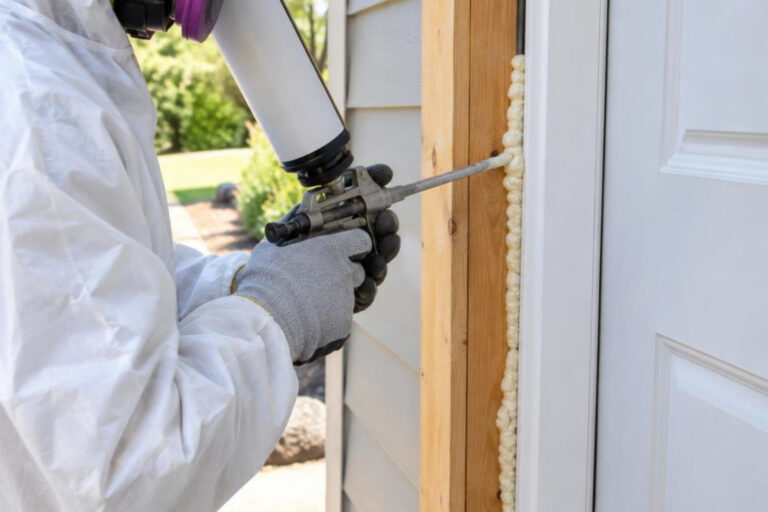
[Pro tip:] Before blowing any loose-fill insulation across an attic floor, use expanding foam to seal the hidden gaps around electrical wire penetrations, plumbing vent pipes, and wall top plates. Adding insulation over unsealed air leaks allows humid attic air to bypass your thermal barrier entirely.
Key Standards for Evaluating Blown-In Insulation Companies
Finding trustworthy blown-in insulation companies requires looking closely at how a contractor manages labor, safety, and project oversight. Because loose-fill insulation covers the entire attic floor, poor installation practices can remain hidden beneath a fluffy layer of material.
When reviewing potential insulation contractors, prioritize the following standards:
- Dedicated In-House Crews: Companies that use full-time, direct employees rather than rotating subcontractors provide consistent quality control and accountability.
- On-Site Leadership: An owner or project manager who remains on-site during installation ensures the job matches the exact specifications outlined in your proposal.
- Active Liability Insurance: Always confirm that the contractor maintains active general liability coverage to protect your home throughout the project.
- Clear Written Proposals: Reliable contractors clearly state the target R-value, estimated material depth in inches, and specific preparation steps rather than offering vague verbal promises.
Why Top Blown-In Insulation Companies Prioritize Air Sealing and Prep Work
Insulation slows heat transfer, but it does not stop airflow. Reputable installers know that blowing material directly over unsealed attic floors compromises performance. Warm, humid air can migrate through ceiling penetrations, undermining your home’s thermal boundary.
A thorough preparation phase includes:
- Inspecting Framing and Drywall: Checking for damaged materials that require targeted insulation repair before blowing new fibers.
- Air Sealing Top Plates and Penetrations: Sealing gaps around electrical boxes, exhaust fan housings, and recessed lights.
- Installing Attic Ventilation Baffles: Placing rigid chutes along the eaves to prevent loose insulation from blocking airflow through soffit vents.
- Protecting Living Spaces: Setting up containment barriers and floor protection along the hose path to keep household areas clean.

Questions to Ask Blown-In Insulation Companies Before Signing
Before signing an agreement, asking specific technical questions helps you separate experienced professionals from rushed operations:
- What specific R-value will be achieved, and how many inches of material does that require?
- Will depth rulers be fastened across the attic joists to verify uniform thickness?
- Are air bypasses and ceiling penetrations sealed before blowing material?
- Do you inspect for existing pest issues or moisture damage that would require professional attic insulation removal?
- Who will be supervising the crew on-site during the actual installation?
Cost Factors and Project Variables

Every home presents unique physical conditions that influence the total scope of an insulation upgrade. Rather than relying on generic square-foot estimates, professional installers evaluate several on-site variables to determine pricing:
- Attic Square Footage: Larger surface areas require more material volume and extended machine run times.
- Desired Target R-Value: Achieving higher thermal resistance requires blowing a deeper layer of material across the space.
- Attic Accessibility and Pitch: Low-sloped roof lines, tight access hatches, and complex framing can increase the labor required to distribute material evenly.
- Condition of Old Insulation: If existing materials are contaminated, compacted, or moisture-damaged, comprehensive insulation removal may be required before clean material can be introduced.
For an accurate assessment tailored to your property’s specific layout, you can easily request a free quote from a qualified local professional.
How Blown-In Compares to Alternative Insulation Methods
Choosing the best insulation strategy depends on your home’s design, age, and existing framing assemblies. While blown-in loose fill is an outstanding, cost-effective choice for open attic floors, other assemblies require different approaches.
- Fiberglass Batts: Often utilized in standard, open wall cavities during new framing, but less effective at covering irregular attic floors without leaving gaps.
- Wall Cavity Solutions: Upgrading wall insulation can improve temperature stability in rooms with heavy sun exposure.
- Crawl Space Applications: In humid coastal environments, specialized crawl space insulation helps protect subflooring assemblies from ground moisture.
- Spray Polyurethane Foam: Choosing residential spray foam insulation provides both thermal resistance and a complete air barrier in a single application. Applying spray foam directly to the underside of the roof deck creates a semi-conditioned attic space, which is especially beneficial when HVAC ducts are located in the attic.
Because every structure has unique airflow and framing dynamics, scheduling a comprehensive professional evaluation is the best way to determine whether loose fill, spray foam, or a hybrid strategy will deliver optimal comfort.
Frequently Asked Questions About Blown-In Insulation
How do homeowners know if their attic needs more blown-in insulation?
Common indicators include uneven indoor temperatures between rooms, cooling systems running constantly during peak heat, and existing material settling below the ceiling joists. Inspecting the attic floor depth helps determine if additional loose-fill material is required to reach recommended thermal resistance levels.
What should homeowners do before the installation crew arrives?
Homeowners should clear a direct pathway from the driveway or equipment staging area to the attic access hatch. Removing stored personal belongings from the area directly below the access opening, securing indoor pets, and covering delicate items nearby ensures a smooth, clean setup.
Can new blown-in insulation be added over existing insulation?
Yes, new blown-in fiberglass insulation can often be installed directly over existing loose-fill or batts, provided the underlying material is dry, clean, and free of pests. If the older insulation is heavily compressed, moldy, or contaminated, it should be removed down to the drywall before new material is added.
Conclusion
Upgrading your attic’s thermal envelope with blown-in insulation is one of the most practical steps you can take to manage indoor humidity, reduce heat gain, and maintain reliable home comfort. Clark Spray Foam is a family-owned insulation contractor in Jacksonville, FL, with over 15 years of experience; owner Michael Clark is on every job, and the company never subcontracts.
To improve your home’s comfort, call (904) 885-9983 or request a free quote online at Clark Spray Foam.